

ON-CHIP
Optic Nerve-on-Chip: A 3D iPSC-Based Platform for Vision Repair and Drug Discovery
ON-CHIP aims to develop an innovative platform of human optic nerve organoids on a chip to accelerate the development of new therapies for glaucoma and deepen our understanding of pathological mechanisms. The programme is a winner of the Organes et organoïdes sur puces (PEPR MED-OOC) exploratory research programme, which aims to deploy a new generation of biological models in France through the development of organs and organoids on chips.

Features
Project duration
42 months
Start :
End :
Project scale
National project
Allocated budget
2 339 186€

Description
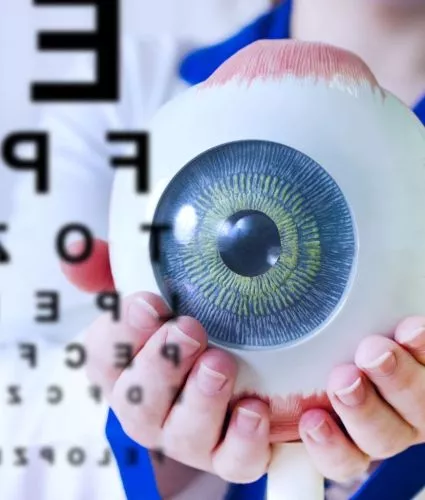
Glaucoma, and in particular primary open-angle glaucoma (POAG), is a multifactorial neurodegenerative disease driven by complex interactions between intraocular pressure, genetic, and systemic factors. It leads to irreversible retinal ganglion cell (RGC) progressive degeneration and optic nerve degeneration, with limited therapeutic options currently available. Among emerging approaches, stem cell therapies offer real hope for patients ; however, their efficacy remains limited by poor graft survival and integration, and the integration in a damaged optic nerve environment remains a challenge.
This project proposes the development of a “Human Optic Nerve-on-a-Chip” platform—an innovative, multi-organ microfluidic device designed to address the urgent need for physiologically relevant systems in glaucoma research. The platform will mimic human optic nerve head, a structure critically stresses during POAG, biology by unidirectionally connecting retinal organoids to brain assembloids, enabling inter-organ neural circuit integration through a sizeable 3D channel representing an unprecedented advancement over current static or 2D models. Pushing the boundaries of neural modeling, the ON-Chip system will, for the first time, incorporate cells from the monocyte-phagocyte lineage, introducing microglial components into a complex glia-neuron interface. Leveraging genetically encoded biosensors for real-time monitoring of RGC homeostasis, the platform will enable dynamic assessment of optic nerve functionality. By integrating diseaserelevant conditions such neuroinflammation and elevated intraocular pressure and patient-specific genetic risk factors, ON-Chip will offer a powerful, personalized model of glaucoma pathophysiology. This system will be ideally suited for drug screening, gene therapy validation, and regenerative medicine applications.
Programme
PEPR organes et organoïdes sur puce (MED-OOC France 2030)
The Research Programme (PEPR MED-OOC) ‘Organs and Organoids on a Chip’, launched by the French government as part of the France 2030 investment plan, is part of the ‘Biotechnology and Health’ acceleration strategy. Led by the CNRS, Inserm and the CEA, and operated by the ANR on behalf of the French government, this programme receives multi-year funding from France 2030.
Its aim is to structure and energise the national scientific community around bioengineering technologies that enable the functions of human organs and tissues to be reproduced on a chip. By promoting synergies between academic research, industry and the hospital sector, the PEPR aims to strengthen France's position in this strategic field for personalised medicine, preclinical evaluation and physiopathological modelling
Project team



Partners