

Research teams and research areas

The Institut de la Vision brings together nearly 300 researchers in 18 research units specialized in ophthalmological pathologies. At the forefront of scientific innovation, these units conduct translational research aimed at developing cutting-edge technological solutions and therapeutic innovations for the prevention, diagnosis and treatment of these pathologies. Organized around five strategic research axes, the teams of the Institut de la Vision cover a wide range of topics, from the molecular physiology of vision to innovative therapeutic approaches.

Imaging of Sensory Information Processing and Neurovascular Coupling

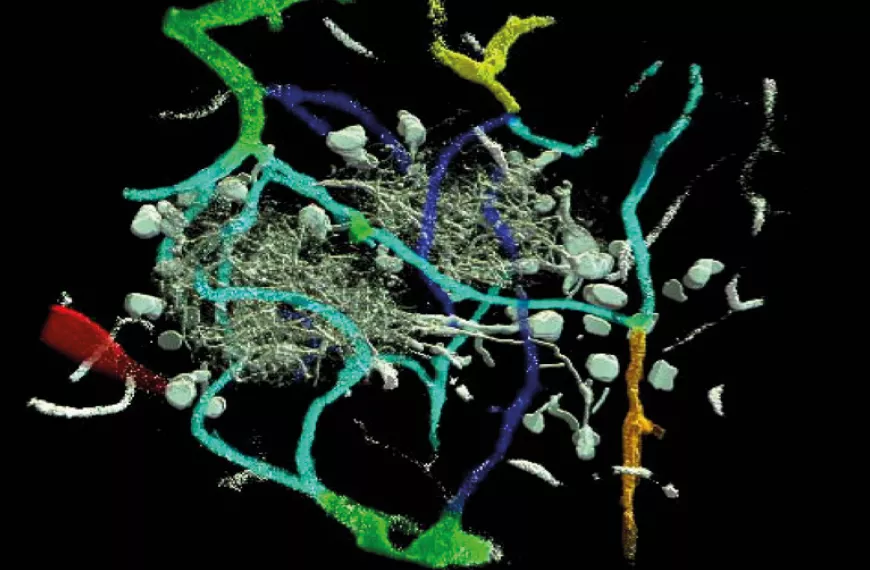
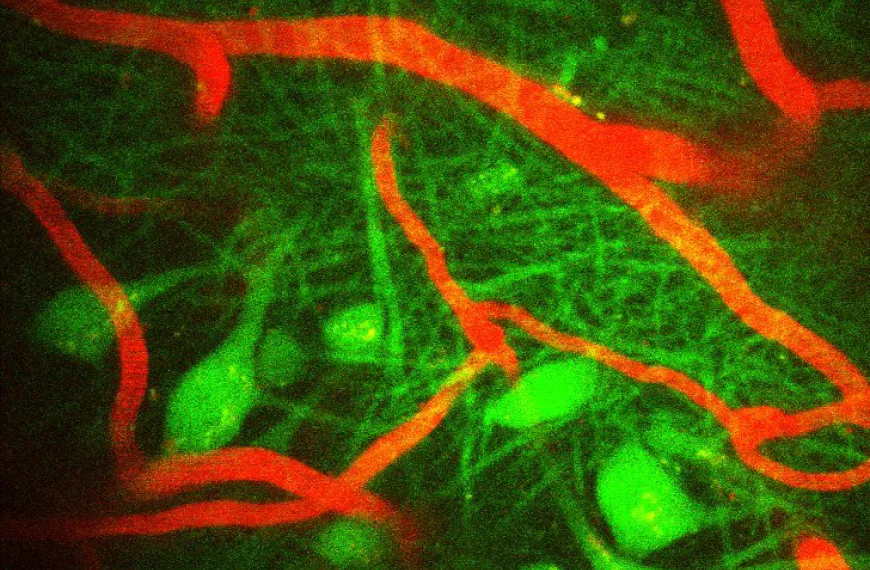
Our group investigates how interactions between neurons and non-neuronal cells contribute to brain activity and to the vascular signals used in functional imaging of the human brain.
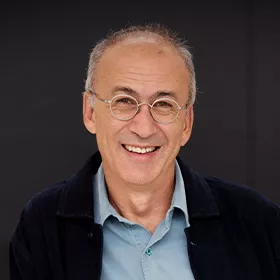
Serge Charpak Research director
View profile

Presentation

When we think or perceive the world, blood rushes to activated brain regions through a process called neurovascular coupling (NVC), which underlies functional brain imaging in humans. In the grey matter, where synaptic transmission and signal processing occur, NVC is closely correlated with neural activity and metabolism; however, little is known about what happens in the white matter. Since its founding, my group has brought together neuroscientists and physicists to develop and adapt new imaging approaches for studying in vivo brain activity. Over the past decade, we have combined two-photon imaging, functional ultrasound imaging, and functional magnetic resonance imaging to link cellular and mesoscopic signals underlying brain activity in the neocortex, the olfactory bulb, and, more recently, the optic nerve. While the majority of this research has focused on the physiology of NVC, we also investigate NVC in pathological contexts.
Research areas

  • Neurovascular coupling
  • Cerebrovascular reactivity to hypercapnia.
  • Metabolic and vascular/tissue oxygenation dynamics during brain activation.
  • Two-photon imaging of the optic nerve in response to a visual stimulation.

Team members
Marine Tournissac CNRS Research fellow
View profile
Emmanuel Than-Trong Postdoctoral researcher
View profile
Manon Omnès Assistant engineer
View profile
Emmanuelle Chaigneau Research engineer
View profile

Scientific publications

Below you will find the latest scientific publications in this field: Imaging of Sensory Information Processing and Neurovascular Coupling.

Saltatory propagation in the myelinated optic nerve is independent of neurovascular coupling.

Suarez-Baquero D.E., Boido D., Assali A., Renier N., Esipova T.V., Ciobanu, L., Charpak S.
Nature Communications In Press.

Neurovascular coupling and briefCO2 interrogate distinct vascular regulations.

Tournissac, M, Chaigneau, E, Pfister, S, Aydin, AK, Goulam Houssen, YA, O’Herron, P, Filosa, J, Collot, M, Joutel, A, Charpak, S.
Nature Communications volume 15, Article number: 7635 (2024)

The oxygen initial dip in the brain of anesthetized and awake mice.

Aydin A-K, Verdier C, Chaigneau E, Charpak S.
Proc Natl Acad Sci U S A. 2022 Apr 5; 119(14)

Transfer functions linking neural calcium to single voxel functional ultrasound signal.

Aydin A-K, Haselden W D, Goulam Houssen Y, Pouzat C, Rungta R L, Demené C, Tanter M, Drew P J, Charpak S, Boido D.
Nature Communications. 2020 Jun 11; 11(1): 2954

Mesoscopic and microscopic imaging of sensory responses in the same animal.

Boido D, Rungta R L, Osmanski B-F, Roche M, Tsurugizawa T, Le Bihan D, Ciobanu L, Charpak S.
Nature Communications. Mar 7; 10(1): 1110

Job offers

No job offers

Contact

Fields marked with an asterisk (*) are mandatory.