

Ageing in vision and action
The Visual Ageing and Action team studies the neurophysiological, perceptual and cognitive mechanisms associated with ageing of the eye, from healthy subjects to those with major age-related diseases, particularly age-related macular degeneration (AMD).
Presentation
The natural deterioration of vision with age gradually affects the independence and quality of life of older people. Losses in visual acuity, depth perception, colour perception and contrast perception impact walking, balance, locomotion, spatial orientation and navigation. With the global increase in the number of elderly people, visual ageing is a major public health issue. Our team studies the neurophysiological, perceptual and cognitive mechanisms involved in this process, from healthy ageing to pathologies such as AMD. We develop digital twins of the visual system, personalised models based on high-precision imaging, functional measurements and clinical cohorts, in order to understand, predict and monitor the progression of visual ageing.
The specific functional and neurobiological factors responsible for the loss of sensitivity in various visual functions—contrast sensitivity, motion perception, visual attention—remain poorly characterised. Our multidisciplinary approach links multilevel patterns of age-related functional consequences, from behaviour to neural processing. We combine approaches from computational neuroscience, neuroimaging (EEG, fMRI), psychophysics, and advanced statistical analysis to construct a unified characterisation of how ageing shapes the sensory and cognitive aspects of visuospatial behaviour.
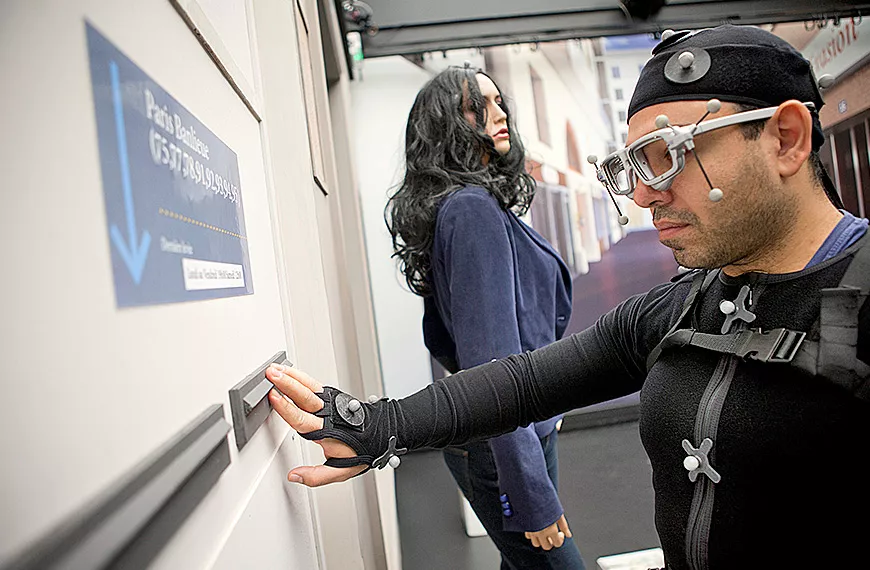
We closely link fundamental research, clinical practice and innovation, collaborating with the Clinical Investigation Centre at Quinze-Vingts Hospital and industrial partners. Our work aims to transform these models into tools for personalised medicine for visual ageing, with concrete applications in early diagnosis, rehabilitation and the optimisation of visual aids. Thanks to cutting-edge technological platforms such as Streetlab, we conduct ecological behavioural experiments and develop innovative solutions to maintain the independence and mobility of elderly people.
Research areas
- Epidemiological analysis of age-related visual function loss, its contributing factors and its impact on independence.
- Development of new imaging and diagnostic systems, as well as visual aids for people with low vision.
- Computational modelling and creation of digital twins of the visual system to predict the progression of ageing and personalise care.
- Longitudinal clinical cohort studies on healthy and pathological ageing, integrating multimodal data (imaging, functional, behavioural).
- Design and evaluation of innovative solutions for visual rehabilitation and optimisation of optical aids.
Team members



Scientific publications
Below you will find the latest scientific publications in this field: Ageing in vision and action.