

2026 SFO Report: interview with Isabelle Audo
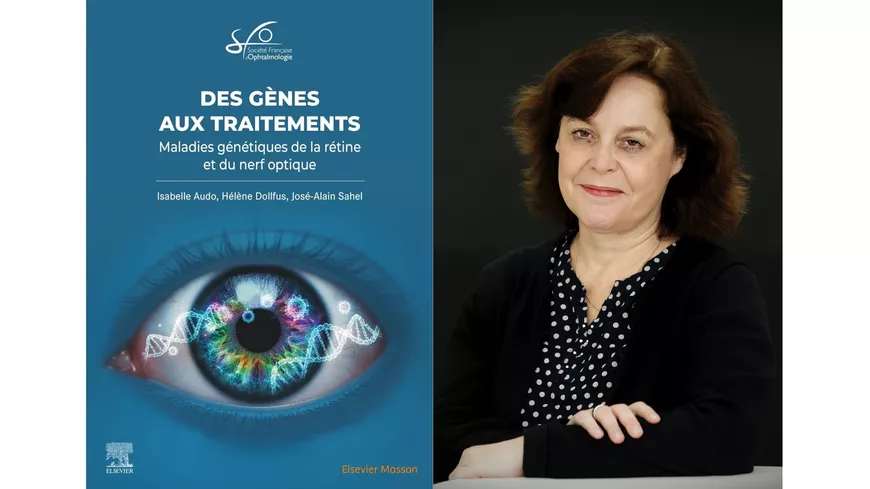
On May 11th, at the 132nd Congress of the French Society of Ophthalmology (SFO), the 2026 SFO report entitled "From Genes to Treatments: Genetic Diseases of the Retina and Optic Nerve" was presented. One of the coordinators, Professor Isabelle Audo, a clinician-researcher at the Institut de la Vision and the Hôpital des Quinze-Vingts, has agreed to reflect on this report, what it means to her and for her community.
What is the SFO report?
Since 1891, the French Society of Ophthalmology (SFO) has published an annual report summarising clinical and scientific knowledge on a specific topic in ophthalmology. This topic is proposed in advance by the SFO’s Executive Committee, which appoints one or more rapporteurs, and is then put to a vote by the SFO’s members. The rapporteurs are responsible for defining the main areas to be developed around the selected theme and for coordinating a collaborative writing process by inviting contributions from French-speaking experts in the field. This is therefore a long-term, in-depth endeavour aimed at producing a reference work that summarises the current state of knowledge and practice on the selected topic.
You coordinated the 2026 report, could you tell us how it was produced?
The report covers rare genetic diseases of the retina and optic nerve, from pathophysiology to therapeutic prospects. The topic was selected in 2022 by the SFO. The project spanned four years. We were asked to coordinate its production with Professors José-Alain Sahel and Hélène Dollfus. We began by refining the topic, drawing up an outline and dividing the work amongst other contributors to appoint section leads, who in turn consulted various specialists to cover the broad subject, from genes to therapy. We then gradually collected the texts that make up the sections and proofread each chapter thoroughly. We were keen to ensure that all those involved in the rare disease sector, from researchers to clinicians, could contribute to this major work. In the end, over a hundred authors took part in the writing process, including around twenty researchers from the Institut de la Vision.
Who is the target audience for this report?
The target audience comprises eye care professionals, including, amongst others, members of the SFO: general practitioners specialising in ophthalmology, hospital ophthalmologists, ophthalmology trainees, senior registrars and other key figures within the eye care sector. As the subject focuses on genetically caused neuroretinal diseases, the audience for the SFO 2026 report is broader and includes geneticists, genetic counsellors, researchers and science students.
What format is it available in?
Like all SFO reports over the past few decades, it has been written and published in collaboration with the publisher Elsevier in book form. An online version is also available on the SFO website for its members. In addition, an app is currently being developed for healthcare professionals. It will provide quick access to key information to aid diagnosis and management. For example, an ophthalmologist who identifies specific abnormalities in a patient’s fundus will be able to easily find supporting evidence for a possible diagnosis of genetic retinal dystrophy.
What does this report mean to you?
Co-ordinating a report of this scale in a collaborative manner is quite a unique experience in a career. It was an honour to showcase all the expertise accumulated in France, including at our fine research institute, and across the French-speaking world on such a fascinating subject, alongside Professor Hélène Dollfus and my mentor, Professor José-Alain Sahel. Furthermore, the drafting of the report culminated in its formal presentation to the entire SFO community on the final day of its annual congress. This was the culmination of a collective effort, driven by everyone’s passion. Due to time constraints, not all chapters were covered. Key points had been selected to raise awareness of the complexity of genetic conditions and, above all, to offer hope by highlighting therapeutic innovations. Through the contribution of the former president of the patient organisation Retina International, alongside Professor José-Alain Sahel, we wished to symbolically give the final word to our patients. All the effort put into this report, as well as the focus of all our work as researchers and doctors, ultimately has a single aim: to improve their daily lives.
Find the 2026 SFO Report: HERE